Singapore Is Our Strong Go Benchmark — Here's the Model Behind the Verdict
Only 30 of 155 venue markets earn Strong Go. Singapore clears every bar at once — 88 demand, 82 opportunity, a 16-point occupancy cushion — and shows exactly what separates the top verdict from a Conditional Go.
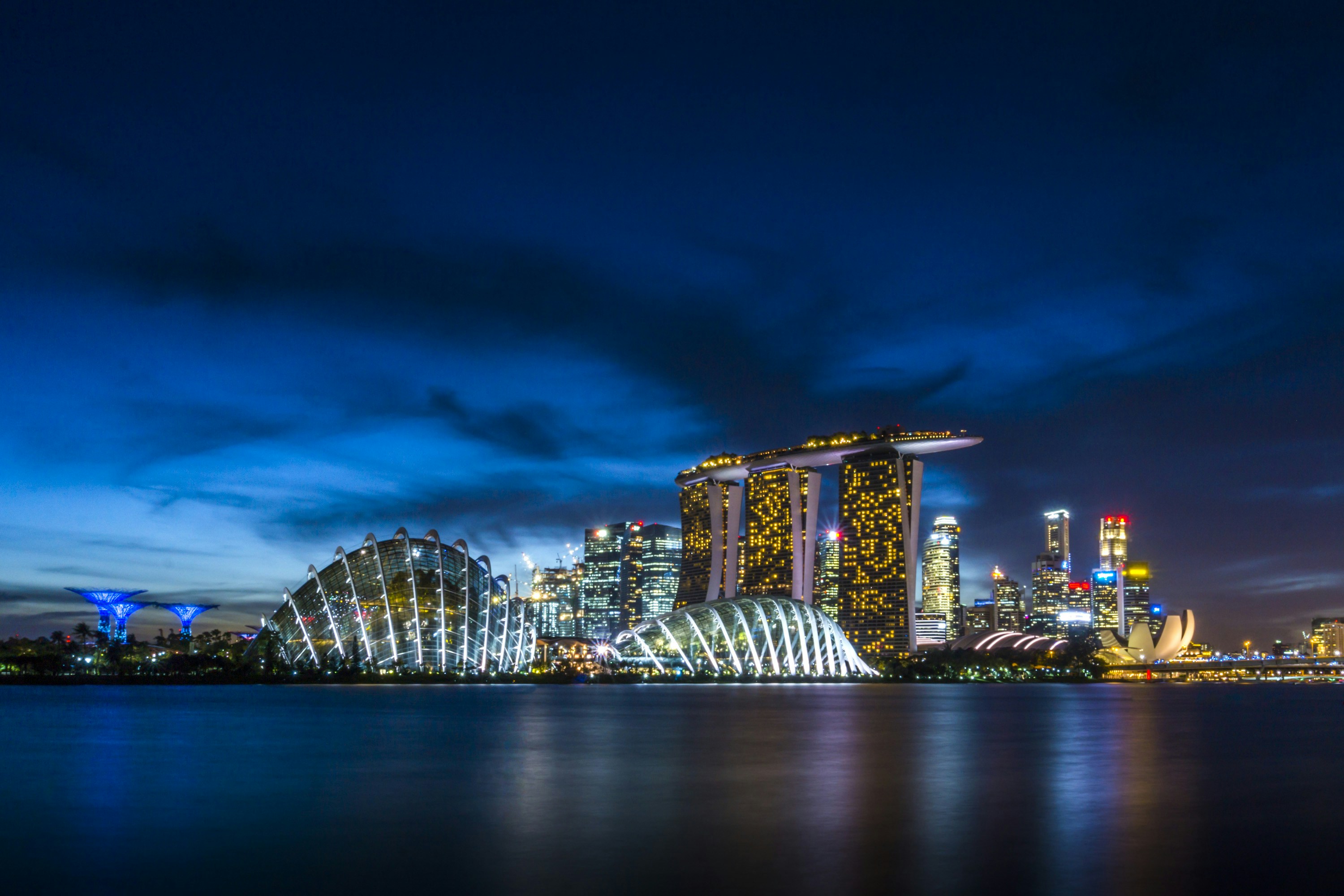
Strong Go is a rare verdict by design. Across the venue index, 30 of 155 cities — 19.4% — earn it. Singapore is the clearest example the model produces, scoring 88 on demand and 82 on opportunity at high confidence on grounded data, and it's useful precisely because it shows what separates a Strong Go from the far more common Conditional Go, rather than just being a market everyone already assumed was good.
What a Strong Go actually requires
The bar isn't "a good market." It's a specific, demanding combination: demand and opportunity scores both comfortably above threshold, a clear quality chasm between current supply and what premium corporate demand wants, three or more distinct anchor-tenant categories driving that demand, no structural red flags, and unit economics that break even well inside the operating range a board would actually approve. Miss any one of those and the honest verdict is Conditional Go — which is still a real opportunity, just one that needs a sharper positioning argument to underwrite.
Where Singapore clears each bar
Demand: 88. Driven by an intense concentration of Fortune 500 APAC headquarters, MICE market growth running at 35% year on year, and a high propensity for premium external spend among finance, tech and professional-services occupiers. This is demand that doesn't rest on one sector's cycle.
Opportunity: 82 — despite high raw supply. This is the counterintuitive part. Singapore is not short of venues — the analysis reads its competitive density as saturated, naming Marina Bay Sands, Suntec, Raffles, Capella, the Fullerton, JW Marriott South Beach, Andaz and Fairmont. The opportunity score is high anyway, because the category is missing: there is no dedicated, leisure-free B2B premium operator in the CBD core, which leaves a lucrative unaddressed gap in the 50–150 delegate market.
Gaps specific enough to build against. No premium, non-hotel, purpose-built corporate venue for 50–150 delegates in the CBD core. Corporates running mid-sized events currently have to put them through hotel lobbies shared with transient leisure crowds. And no ultra-premium venue offering friction-free, enterprise-grade AV without the constraints of a heritage building.
Unit economics that survive a conservative ramp. Breakeven sits at 52% occupancy against a 68% target — a 16-point cushion, carried despite Marina Bay Grade A rent of S$12.50 psf per month, one of the highest cost bases in the index. Fit-out for a 15,000 sq ft flagship runs $3.5m–$4.5m, with base-case payback at 4.5 years and an EBITDA benchmark of 22–26%.
What separates Singapore from a near-miss
The more instructive comparison isn't Singapore against a weak market — it's Singapore against a strong Conditional Go that falls just short. A city can post an impressive demand score and still miss on a single dimension: a breakeven that only works under an optimistic ramp-up, or an anchor-tenant base that's genuinely strong but concentrated in one or two sectors rather than three-plus independent categories.
Singapore's case holds because no single dimension is doing all the work. Pull out any one driver and the remaining case still clears the bar on its own. That is a meaningfully different — and much rarer — profile than a market whose top verdict rests on one standout number carrying the rest.
Why the rarity of Strong Go is the point
If a third of the index came back Strong Go, the verdict would stop meaning anything — it would just be a restatement of "this is a big city." The actual distribution across 155 venue markets: Conditional Go 62, No Go 58, Strong Go 30, Hold 5. Nearly twice as many cities are told no outright as are given the top verdict — and through the fine-dining restaurant lens, across a wider 208-city set, the ratio is closer to seven to one.
That spread is the model working, not a limitation of it. A scoring system that can't produce an inconvenient answer isn't measuring anything.
That's also why Strong Go verdicts should be treated as time-bound rather than permanent. A market that clears every bar today can drift toward Conditional Go if the competitive set catches up or a named risk materialises — which is the argument for re-scoring on a defined cycle. Any city's verdict, including Singapore's, is a current read, not a settled fact.
The takeaway
A Conditional Go isn't a weaker version of a Strong Go — it's a different kind of decision, one that needs a sharper positioning case rather than a bigger appetite for risk. Singapore is useful less as "a city to copy" and more as the reference point for what has to be true before a market clears every bar at once: high demand, a missing category rather than merely thin supply, and a cost base that still leaves a double-digit occupancy cushion. Book a demo and we'll run the same read on the markets you're actually deciding between.
Figures cited are from GrowSmart's cached venue analysis for Singapore, generated 20 August 2026 (data confidence: Grounded; verdict confidence: High). Lease benchmark CBRE Q2 2026. Verdict distribution across 155 cached venue analyses as at September 2026.
See this run on the markets you’re actually weighing.
A short live session on your shortlist — we run the engine on the call and you keep the output.
Book a demo